Dakota Conflict Trials (1862)
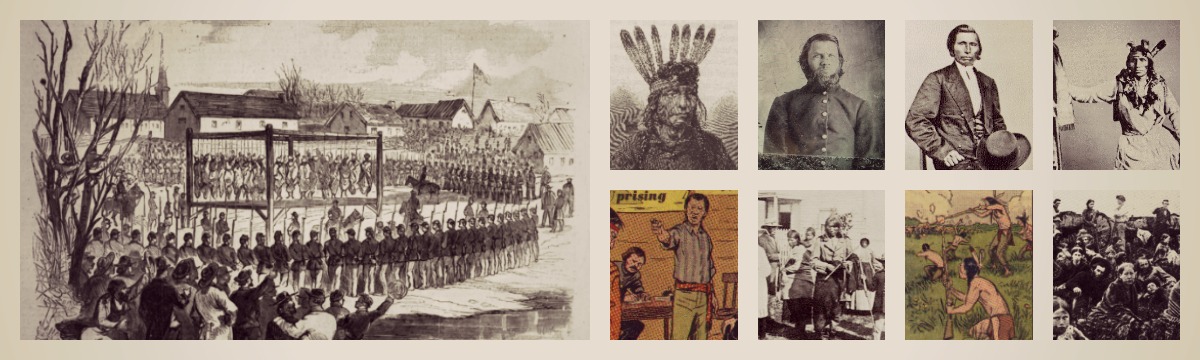
A framed sketch of the scene depicted on this page, the execution of thirty-eight Sioux on December 26, 1862, used to fascinate me when, as a boy in Mankato, Minnesota, I would visit the Blue Earth County Historical Museum. Apart from its macabre appeal, the picture impressed me because it captured the most famous event in the history of my hometown** (easily surpassing in significance the death there of an obscure ex-Vice President--Schuyler Colfax-- who died while changing trains on his way back from the Black Hills). The hanging, following trials which condemned over three hundred participants in the 1862 Dakota Conflict, stands as the largest mass execution in American history. Only the unpopular intervention of President Lincoln saved 265 other Dakota from the fate met by the less fortunate thirty-eight. The mass hanging was the concluding scene in the opening chapter of a story of American-Sioux conflict that would not end until the Seventh Cavalry completed its massacre at Wounded Knee, South Dakota, on December 29, 1890... Continued