John Peter Zenger Trial (1735)
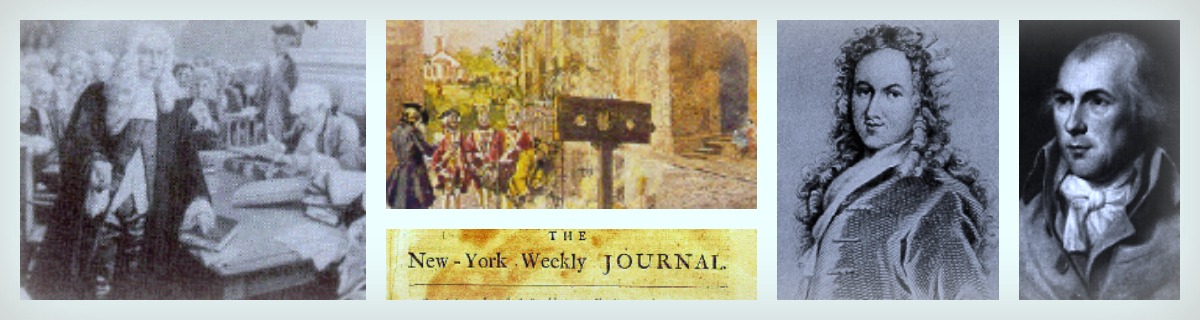
No country values free expression more highly than we do, and no case in American history stands as a greater landmark on the road to protection for freedom of the press than the trial of a German immigrant printer named John Peter Zenger. On August 5, 1735, twelve New York jurors, inspired by the eloquence of the best lawyer of the period, Andrew Hamilton, ignored the instructions of the Governors's hand-picked judges and returned a verdict of "Not Guilty" on the charge of publishing "seditious libels." The Zenger trial is a remarkable story of a divided Colony, the beginnings of a free press, and the stubborn independence of American jurors.
Background
The man generally perceived to be the villain of the Zenger affair, William Cosby, arrived in New York on August 7, 1731 to assume his post as Governor for New York Province. Cosby quickly developed a reputation as "a rogue governor." It is almost impossible to find a positive adjective among the many used by historians to describe the new governor : "spiteful," "greedy," "jealous," "quick-tempered," "dull," "unlettered," and "haughty" are a sample of those that have been applied...."Continued